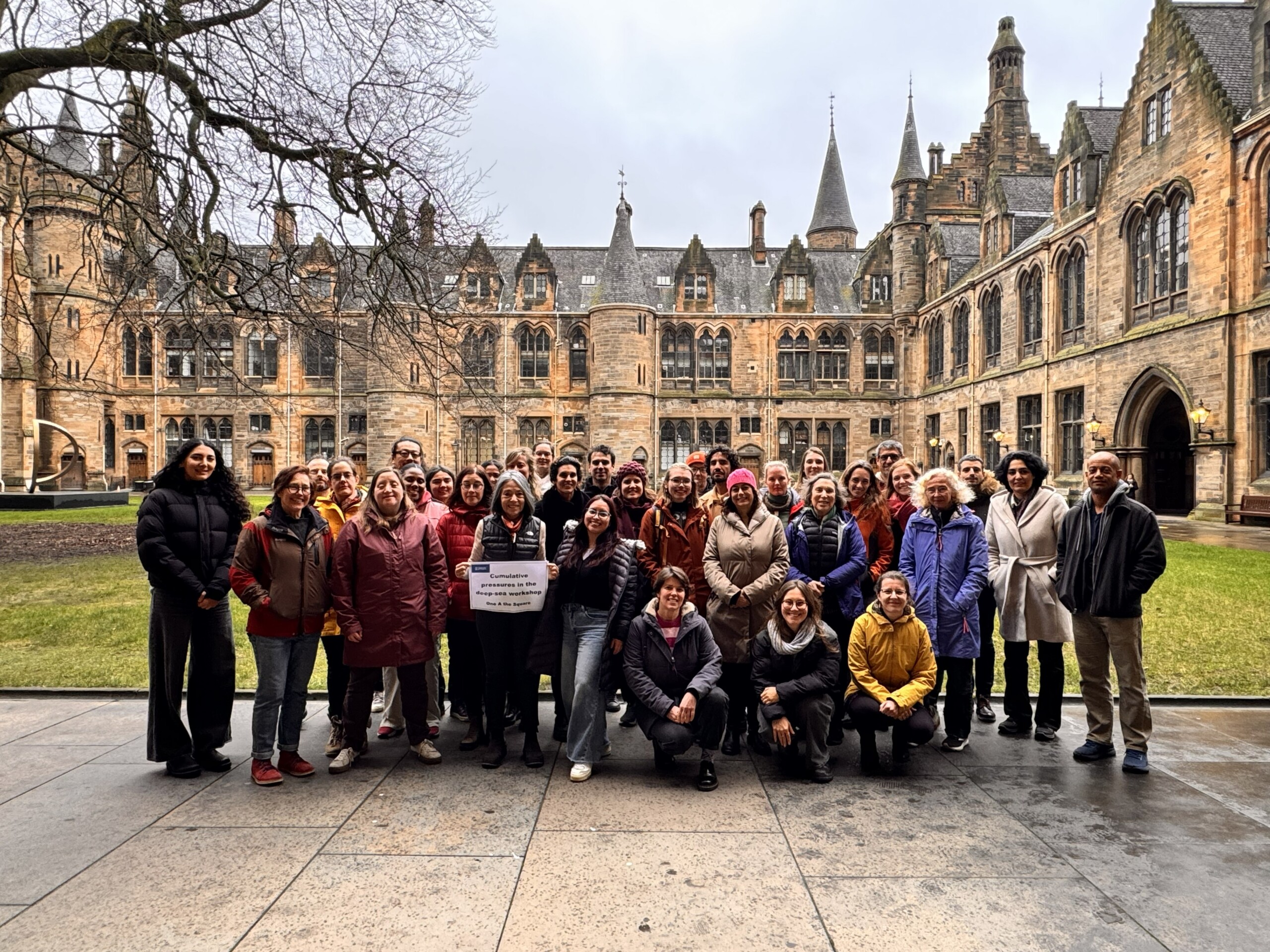
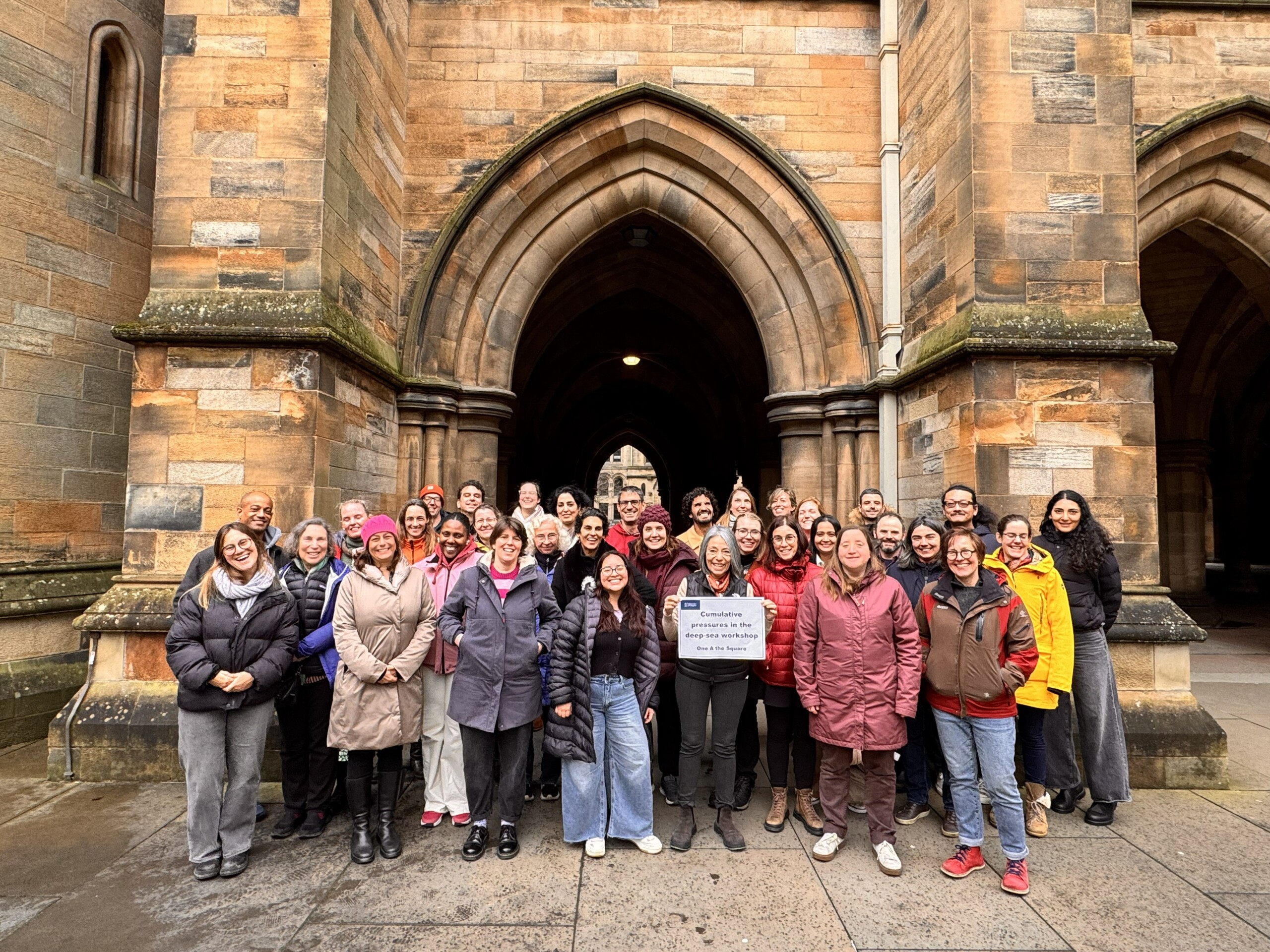
In February 2026, alongside the Ocean Sciences Meeting in Glasgow, our Climate Change Working Group convened an international expert workshop at the University of Glasgow. The workshop brought together 36 specialists from across disciplines and sectors to address one of the most pressing challenges facing the deep sea: understanding and assessing the cumulative impacts of human activities and climate change.
Thank you to our Working Group co-leads, Michelle Guraieb Casis, Lisa Levin and Jesse Van Der Grient, and our DOSI Ambassadors, Daniëlle de Jonge and Joan Alfaro who organised and delivered the workshop.
A collaborative approach to a complex challenge
Deep-sea ecosystems are increasingly influenced by multiple, overlapping pressures, from climate-driven changes such as warming, deoxygenation, and acidification, to emerging industrial activities. Assessing how these pressures interact is critical, yet remains scientifically and methodologically challenging.
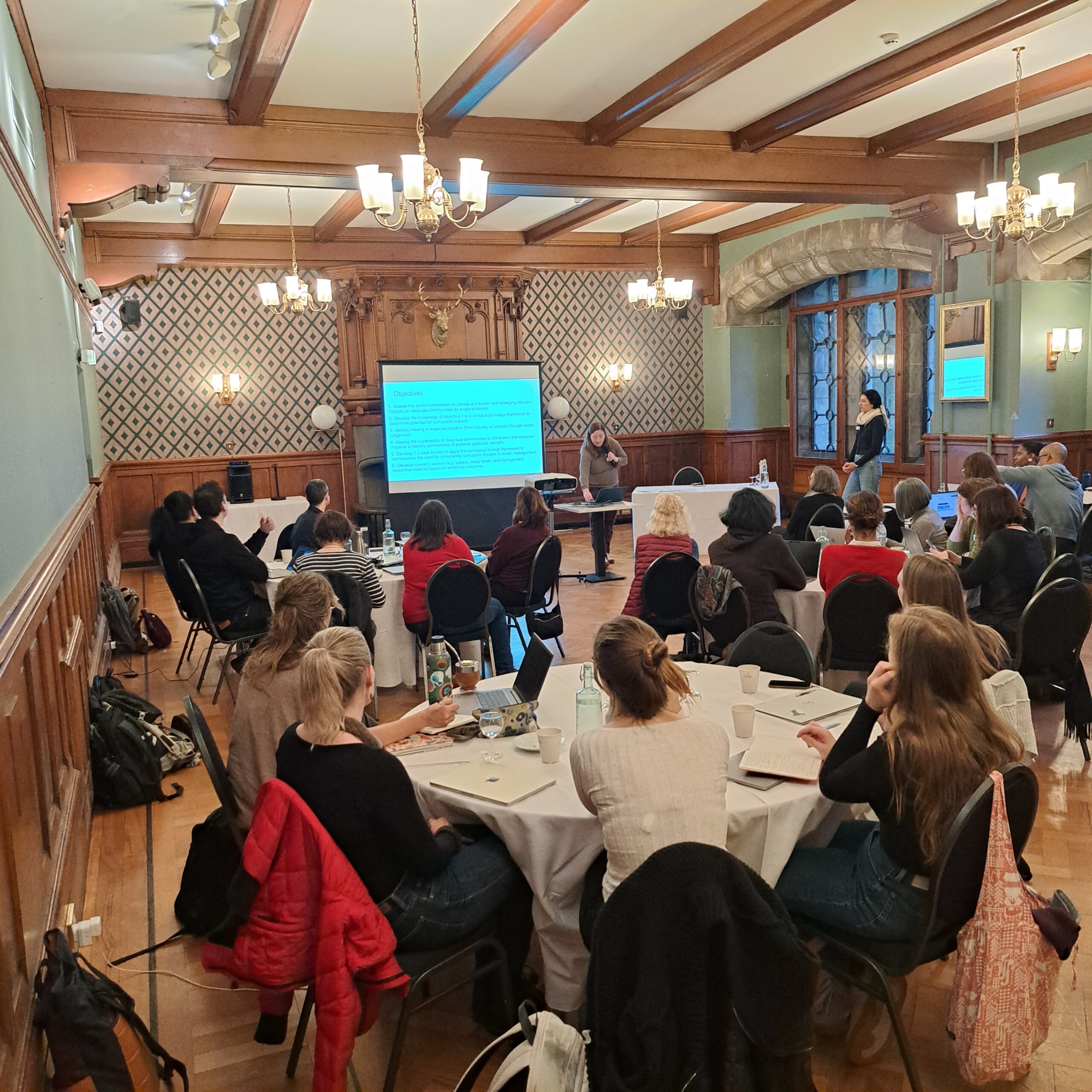
The workshop focused on advancing approaches to Cumulative Impact Assessments (CIAs) in the deep ocean. Participants combined insights from literature, expert knowledge, and collaborative discussion to begin developing a shared conceptual framework for understanding how cumulative impacts affect deep-sea ecosystems and their vulnerabilities.
Bridging gaps in knowledge and practice
Discussions highlighted both the urgency and the complexity of addressing cumulative impacts in deep-sea environments. Significant data gaps and uncertainties continue to limit our ability to fully understand ecosystem responses, particularly in remote and underexplored regions.
At the same time, the workshop underscored the importance of cross-sector and international collaboration. Bringing together expertise from science, policy, and industry created space for meaningful dialogue on how to better align research, monitoring, and management approaches.
Supporting better decision-making
A key takeaway from the workshop was the need to strengthen the link between science and policy. Improved approaches to cumulative impact assessment can play a vital role in supporting ecosystem-based management and ensuring that both existing and emerging ocean uses are considered in an integrated and sustainable way.
The outcomes of the workshop will contribute to ongoing scientific research and inform future guidance for policy and management, particularly in areas beyond national jurisdiction where governance frameworks are rapidly evolving.
What’s next?
Work is now underway to further develop the workshop’s outputs and translate them into practical tools and guidance. These will be shared with the broader community in the coming months.
As pressures on the deep ocean continue to grow, advancing our understanding of cumulative impacts is essential to safeguarding these ecosystems for the future.
Stay tuned for updates and upcoming outputs from this work.