
The ocean connects climate, biodiversity, land and people across the planet. It regulates the major cycles of water, carbon and nutrients, and it supports food security, livelihoods and human well-being. It also links environmental processes across national boundaries. Yet the way we govern it is fragmented. Several international agreements have mandates, scientific processes and implementation mechanisms that overlap, and they don’t always work in step.
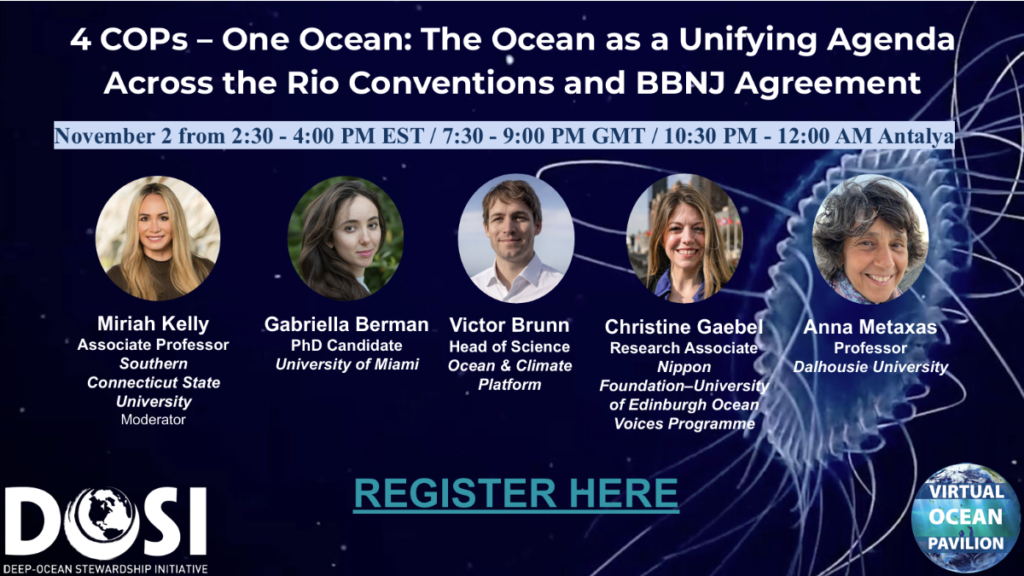
On November 2, during COP31 in Antalya, the Virtual Ocean Pavilion hosted a live roundtable on this challenge: “4 COPs – One Ocean: The Ocean as a Unifying Agenda Across the Rio Conventions and BBNJ Agreement.”
Why this conversation matters
Better coordination between agreements offers a chance to increase coherence, reduce duplication and strengthen implementation. The session brought together experts from four frameworks:
- the Convention on Biological Diversity (CBD)
- the United Nations Convention to Combat Desertification (UNCCD)
- the United Nations Framework Convention on Climate Change (UNFCCC)
- the Agreement on Biodiversity Beyond National Jurisdiction (BBNJ)
The discussion linked directly to the COP31 Presidency’s priorities on Ocean and Seas (Priority 2) and Rio Synergy (Priority 9). It also aimed to contribute to Priority 5, Climate Action Implementation Mechanisms.
The speakers
Each speaker represented one framework and was asked two questions: Why is the ocean important from your convention’s point of view? and Where does the ocean fit in your convention’s work?
- Victor Brun, Head of Science / Responsible Science at the Ocean & Climate Platform, representing the UNFCCC
- Gabriella Berman, PhD Candidate at the Abess Center for Ecosystem Science and Policy, representing the UNCCD
- Anna Metaxas, Professor at Dalhousie University, representing the CBD
- Christine Gaebel, Research Associate with the Nippon Foundation–University of Edinburgh Ocean Voices Programme, representing the BBNJ Agreement
- Miriah Kelly, Associate Professor at Southern Connecticut State University, who hosted and moderated
Each speaker also proposed one concrete step toward unifying ocean action across the four conventions and agreements.
The session explored practical opportunities for cooperation in several areas:
- scientific and technical bodies working together
- shared assessments, indicators, metrics and ocean data
- more integrated governance frameworks
- aligned capacity development and technology transfer
- ocean-based finance
- meaningful inclusion of diverse knowledge systems
The moderated discussion asked what alignment solutions could realistically be implemented, what benefits they would bring, and what barriers stand in the way. One question captured the heart of it: could we measure and report ocean action once so that it counts across conventions? Collaborative reporting and measurement is only one route to closer alignment, and the conversation looked at others too.
About the organizers
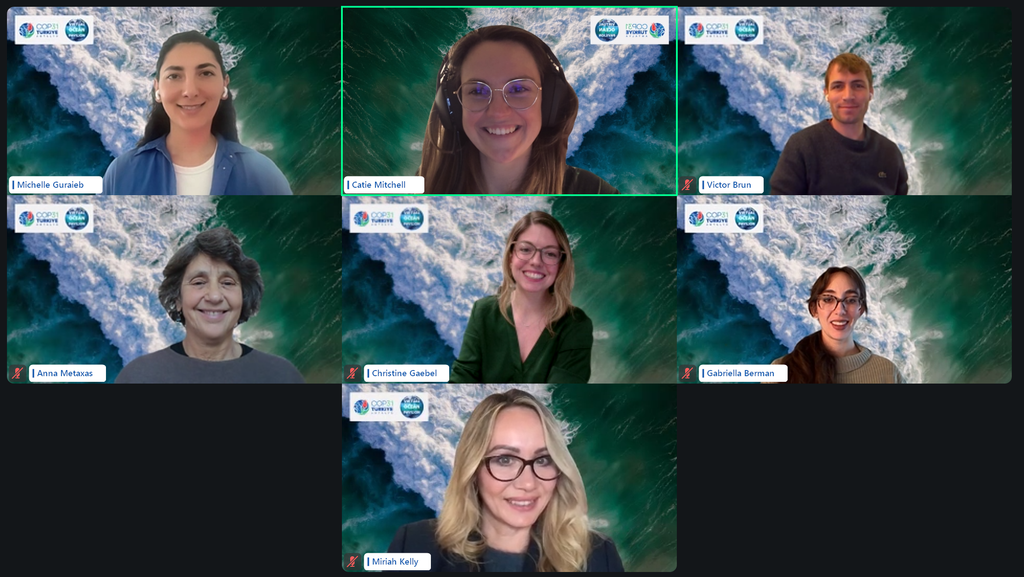
The event was organized by Prof. Lisa Levin, Michelle Guraieb and Dr. Natalya Gallo as part of the COP31 Virtual Ocean Pavilion.
Watch the full session
If you missed the live event, the recording is now on YouTube.
The session ran about 90 minutes: speaker presentations, a moderated discussion, and an open Q&A with participants, closing with next steps toward Priority 5.