Biodiversity Beyond National Jurisdiction (BBNJ)
The Issue: For the 61% of the ocean that lies in areas beyond national jurisdiction, a new international agreement for the conservation and sustainable use of biodiversity, the BBNJ Agreement, has now been adopted at the UN. Science, technology and innovation crosscut this new agreement and will play an integral role during implementation, including for area-based management tools, environmental impact assessments, capacity building and technology transfer, and the sharing benefits from marine genetic resources. As such, connecting deep ocean science and knowledge with decision-makers remains paramount as the agreement moves towards ratification and entry into force.
The Working Group: The BBNJ working group, which currently has 209 members, aims to connect scientific information and knowledge with decision-makers and policy processes related to the BBNJ Agreement.
- Synthesise scientific knowledge relating to the conservation and sustainable use of BBNJ and identify key issues for the development of the BBNJ instrument;
- Publish open-access academic papers, policy briefs, and educational materials on key issues for BBNJ and provide input to the BBNJ negotiation process through submissions, side-events, workshops and engagement;
- Provide a focal point for deep-sea scientific expertise and network engagement on BBNJ relevant issues and a platform for collaboration between scientists and other stakeholders.
- Gaebel, C. et al., 2025, The BBNJ clearing-house mechanism: considerations for its diverse functions, users, and sources.
- An actionable guide to the United Nations’ Biodiversity Beyond National Jurisdiction Agreement for research scientists (2025), authored by Working Group co-leads Jeff Marlow and Harriet
Harden-Davies (Marlow et al). This publication offers a practical guide for researchers hoping to understand
how the BBNJ Agreement will impact their work upon entry into force, highlighting relevant requirements,
recommendations, and opportunities. It highlights the many opportunities for researchers to support the
Agreement’s conservation and sustainability objectives through, for example, proposing marine protected
areas, conducting environmental impact assessments, or joining technically oriented subsidiary bodies that
will add practical detail to the Agreement’s implementation in the years to come. Given the deep integration
of science into the BBNJ Agreement, marine scientists aiming to work in ABNJ are ideally positioned to both
benefit, and benefit from the Agreement’s forward-looking objectives. - Gaebel, C. et al., 2024, Institutionalising science and knowledge under the agreement for the conservation and sustainable use of marine biodiversity of areas beyond national jurisdiction (BBNJ): Stakeholder perspectives on a fit-for-purpose Scientific and Technical Body, Marine Policy,
- Gaebel, C., A new agreement for biodiversity of areas beyond national jurisdiction (BBNJ), Deep-Sea Life, Issue 21.
- November 2020 – New report commissioned by the Alliance of Small Island States (AOSIS) investigates the scientific capacity challenges facing Small Island Developing States in relation to marine genetic resources of areas beyond national jurisdiction and proposes options to address such challenges through a new treaty for biodiversity beyond national jurisdiction. The report was led by Harriet Harden-Davies and Marjo Vierros alongside an expert advisory panel: Judith Gobin (Professor, University of the West Indies), Marcel Jaspars (Professor, University of Aberdeen), Angelique Pouponneau (CEO, Seychelles Conservation and Climate Adaptation Trust) and Katy Soapi (Research Scientist, Fiji). Read the summary for policymakers.
- June 2020 – Harden-Davies H, Humphries F, Maloney M, Wright G, Gjerde K, Vierros M (2020) Rights of Nature: Perspectives for Global Ocean Stewardship. Marine Policy.
- Gaebel, C. et al., 2020, Recognising Stakeholder Conflict and Encouraging Consensus of ‘Science-Based Management’ Approaches for Marine Biodiversity Beyond National Jurisdiction (BBNJ), Frontiers in Marine Science
- September 2019 – Rabone M, Harden-Davies H, Collins JE, Zajderman S, Appeltans W, Droege G, Brandt A, Pardo-Lopez L, Dahlgren TG, Glover AG and Horton T (2019) Access to Marine Genetic Resources (MGR): Raising awareness of best-practice through a new agreement for biodiversity beyond national jurisdiction (BBNJ). Front. Mar. Sci.
2026
- DOSI BBNJ Working Group co-lead Christine Gaebel and Working Group member Julia Schutz Veiga delivered a capacity-building session for the Ocean Youth Constituency and UN Major Group for Children and Youth. The session aimed to build and develop knowledge of the Clearing-House Mechanism and the current state-of-play regarding its design and establishment prior to youth members attending PrepCom3.
- DOSI BBNJ Working Group co-lead Christine Gaebel, Working Group members Julia Schutz Veiga, Amelia Westmoreland, Mariana Caldeira, and DOSI members Eva Ramirez Llodra, Maila Guilhon, and Lisa Levin, attended the third BBNJ Symposium in Rio Brazil. Christine Gaebel, Julia Schutz Veiga, Mariana Caldeira, and Lisa Levin presented on panels across the event. Christine Gaebel attended an associated EU hosted workshop on the BBNJ Clearing-House Mechanism and Capacity Building. Working Group member Julia Schutz Veiga organised, presented, and moderated discussions at the workshop.
- The BBNJ Working Group continued its strong engagement with the broader deep-ocean community through participation in the DOOS Annual General Meeting. Christine Gaebel, Lisa Levin, and Liz Hetherington led a dedicated breakout session on the BBNJ Agreement, highlighting recent developments and opportunities for scientific engagement. The session received excellent feedback and generated new interest in DOSI’s work, resulting in several new subscribers joining the community.
- BBNJ Working Group co-lead, Christine Gaebel, was invited by Climate Change Working Group co-lead Natalya Gallo to present at and participate in an online workshop hosted by OceanICU exploring the intersection between the BBNJ Agreement, deep-sea mining, and ocean carbon. Participants ranged from academics to practitioners to BBNJ delegates.
2025
- Working Group co-lead, Christine Gaebel, attended the 33rd session of the Intergovernmental
Oceanographic Commission (IOC) Assembly, where she engaged with delegations regarding IOC-BBNJ
interactions and opportunities. - BBNJ workshop in Aberdeen, Scotland – Marcel Jaspars co-organised a BBNJ workshop titled “Implementing the new UN BBNJ Treaty: a deep dive on the value of MGR, BBNJ Batch Identifiers and obligations on scientists”. The event was held in Aberdeen with panel discussions such as “The Value of Marine Genetic Resources” and “What’s in it for scientists – advantages of taking part in BBNJ”. DOSI BBNJ Working Group members participated, and DOSI supported attendance for members from LMICs. Working Group co-lead Christine Gaebel provided a presentation on the emerging science-policy interface and associated institutional arrangements established under the BBNJ Agreement.
2024 and earlier
- “The Ocean Decade and the BBNJ Agreement: Synergies and opportunities”: The BBNJ working group co-hosted an on-site event at the Ocean Decade Conference in Barcelona, alongside the IUCN, Nippon Foundation-University of Edinburgh Ocean Voices Programme, IDDRI, and the High Seas Alliance.
- Working group Co-Leads Christine Gaebel and Paul Snelgrove were invited panellists at the International Symposium on Science-Policy Interfaces hosted by IOC UNESCO and the UN Division for Ocean Affairs and the Law of the Sea (DOALOS) in Paris, France. Summary of discussions can be found here.

- Working group Co-Leads Christine Gaebel and Harriet Harden Davies were invited panellists at the High Seas Treaty Symposium in Edinburgh, UK. Christine joined the panel on ‘BBNJ and the best-available science’, and Harriet joined the panel on ‘Capacity building and transfer of marine technology’.
- Working group Co-Lead Christine Gaebel was an invited keynote speaker at the International Symposium on Deep-Sea Corals, where she spoke about deep-ocean science and knowledge in implementing the BBNJ Agreement and the role of the Scientific and Technical Body. At the symposium, the BBNJ working group also hosted a workshop, which brought together deep-ocean scientists to explore opportunities and challenges for deep-ocean science under the BBNJ agreement.
- High Seas Treaty Dialogue ( 20-21 January 2020, Nobel Institute, Oslo, Norway): High Seas Treaty Dialogue on Marine Genetic Resources and Benefit Sharing. Harriet Harden-Davies was invited to discuss one of the most challenging issues to date in the BBNJ negotiations.
- Towards a package: marine biodiversity beyond national jurisdiction (22-23 January 2020, Royal Society of Edinburgh, UK): DOSI co-sponsored (along with University of Aberdeen and the Atlas Project) a gathering of more than 50 participants to discuss the development of BBNJ. The participants included policymakers, diplomats, civil society and academic experts from legal, scientific and other backgrounds. With the fourth (and possibly final) round of negotiations fast approaching, this workshop provided a valuable opportunity to exchange views and identify areas where further discussions are needed. Harriet Harden-Davies was an invited speaker for the session on Access and Benefit-Sharing. In addition to the workshop, a public event and reception was held at the Royal Society of Edinburgh on the evening of 22 January. Harriet Harden-Davies delivered the opening address.
- BBNJ Working Group Workshop, University of Southampton, UK (April 2018): Science diplomacy for stewardship advancing science-based policy for biodiversity beyond national jurisdiction through the Deep Ocean Stewardship Initiative (DOSI). Link to Report.
- Paul Snelgrove attended BBNJ ICG and presented on behalf of DOSI BBNJ working group during a side-event with the IOC, Belgium and Nauru entitled The potential interlinkages between the UN Ocean Science Decade and scientific aspects in the context of BBNJ in April 2018.
- Life Moves Slowly in the Deep Ocean: The Challenge of Timescales in Ocean Restoration
- The Deep Ocean and BBNJ: Important Points for IGC-5
- Climate Change and Biodiversity Beyond National Jurisdiction
- The Deep Ocean and BBNJ: Important Points for IGC-4
- Towards coherence and avoiding undermining: policy recommendations on implementation of the BBNJ Agreement regarding marine genetic resources
- How to Engage and Contribute to the Implementation of the BBNJ Agreement as a Marine
Scientist
PrepCom3
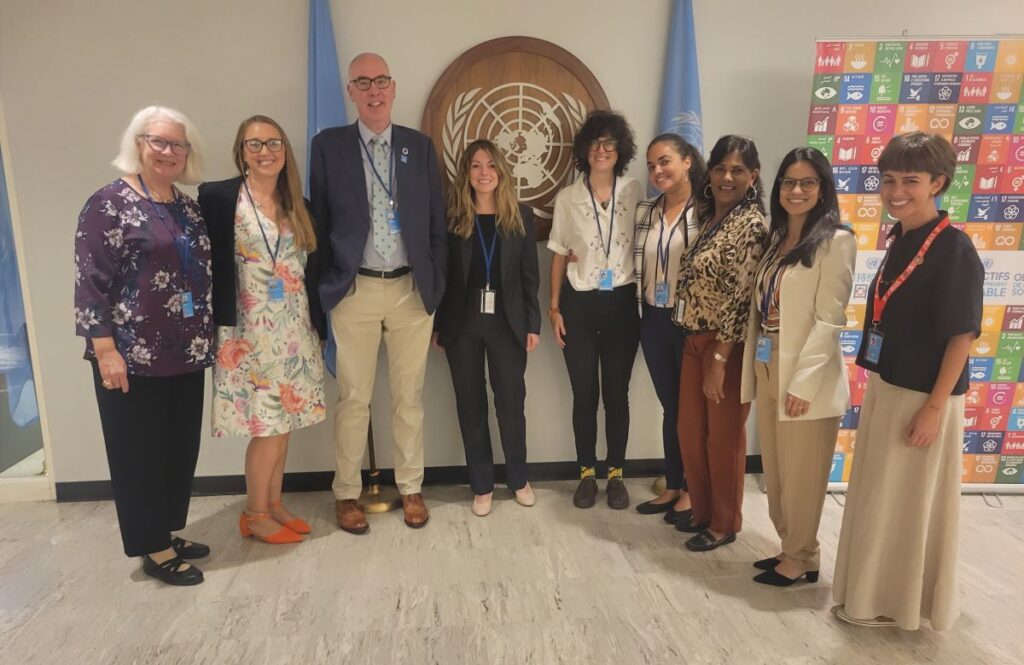
Six DOSI Ambassadors attended BBNJ PrepCom3 in New York, with strong representation from
across the network. DOSI was further supported by other members contributing remotely, where the
Working Group trialled a remote engagement strategy mixing remote note-taking, daily engagement with on
the-ground Ambassadors, and shared documentation. Whilst on mission, DOSI Ambassadors engaged with
delegations to provide the best available scientific information and knowledge, including consultations with
the EU, CLAM, and other negotiating blocs. DOSI Ambassadors distributed Policy Briefs and brochures and
attended high-level events hosted by BBNJ delegations and actors to deepen our engagement with State
actors (e.g. Palau Mission, Singapore Consulate, New Zealand Consulate, Explorers Club). Feedback from
partners at the Global Ocean Forum highlighted the DOSI delegation as “an impressive team” and a pleasure
to collaborate with. Read our blog covering reflections from the group about the PrepCom process.
PrepCom2
DOSI Ambassadors – experts from across North, Central, and South America, Europe, Africa, and Oceania – attended the second session of the BBNJ Preparatory Commission (PrepCom2) to help
connect science and policy for the deep ocean. In particular, the DOSI team are closely following discussions
on 1) the composition, design, and rules of procedure for the Scientific and Technical Body (STB); 2) the
design and implementation of the Clearing-House Mechanism (ClHM). As cornerstones for how to mobilise science and knowledge under the BBNJ Agreement, an effective STB and ClHM must not only serve global
decision-making needs, but also reflect the realities of deep-ocean research – including its opportunities,
challenges, and diversity of perspectives worldwide. As part of this work, Working Group Leads hosted pre-,
during, and post-session meetings with DOSI Ambassadors to help develop and build their capacity to
engage in international governance processes and meetings.
Organisational Meeting of the BBNJ PrepCom
- Working Group Co-Lead Christine Gaebel and group member Marina Garwood, among other members, attended the organisational meeting for the BBNJ PrepCom to continue and advance DOSI’s efforts to connect delegates with the best available science and knowledge.
IGC5
- We attended the final session of BBNJ IGC-5 to share important ocean science. Our policy brief on connections between the deep ocean and BBNJ is here. You can read a report of DOSI’s actions at the event here.
- BBNJ Working Group experts were in attendance to share important science at the first part of IGC5 in August of 2022. You can read an update on how the Conference went here. You can also read our updated policy brief on The Deep Ocean and BBNJ here.
IGC4
- The last in the series of four intergovernmental conferences (IGC) to craft the new legal instrument under the UN Convention on the Law of the Sea was due to take place in March 2020. While our DOSI stakeholder commentary was submitted in advance of this date, the event was unfortunately cancelled due to travel restrictions imposed by COVID-19. Negotiations restarted in March of 2022, and DOSI is supporting those efforts. In addition to having scientists in attendance, we have created a policy brief for negotiators titled The Deep Ocean and BBNJ: Important Points for IGC-4.
IGC3
- DOSI attended with a full delegation, disseminating a new policy brief, taking part in discussions, and delivering a DOSI side-event.
- Relevant policy briefs:
- Ocean Deoxygenation: A Hidden Threat to Biodiversity beyond national jurisdiction
- DOSI comments on BBNJ Text Aug 2019
- DOSI side-event: Updates from the field: Connecting Ecosystems and Cultures through Deep-Sea Exploration
- Blog: Marine genetic resources beyond national jurisdiction
IGC2
- Side Events: In support of the second two-week conference, DOSI collaborated in five side events: (https://www.un.org/bbnj/content/side-events)
- 27/03; “Facilitating Capacity Development, Transfer of Marine Technology and Ocean Science in BBNJ” IOC & DOSI. DOSI speaker: Muriel Rabone
- 28/03: “Mare Geneticum and an Ecosystem Approach: Power, Openness and Sharing” IUCN, DOSI, University of Aberdeen. DOSI speaker: Muriel Rabone
- 29/03: “Conservation, Climate Change and Ocean Biodiversity Beyond National Jurisdiction”, Papua New Guinea; Belize, Federated States of Micronesia, DOSI. DOSI speaker: Diva Amon
- 30/03: “PSIDS Regional workshop”: IUCN, Norway, DOSI. DOSI speaker: Harriet Harden-Davies
- 01/04: “The Role of Science and a Scientific Body Under the New Instrument” Canada, High Seas Alliance, DOSI. DOSI speakers: Paul Snelgrove, Harriet Harden-Davies
- Interventions: In total, three DOSI interventions were made: intervention 1; intervention 2, intervention 3
- Policy Briefs: Two new policy briefs were published by DOSI in advance of the meeting and have been widely distributed:
- “Access and sharing benefits from marine genetic resources from ABNJ: building on best practices in the scientific community” http://dosi-project.org/wp-content/uploads/2018/05/027-DOSI-MGR-2-print-2.pdf
- “The Full Value of Marine Genetic Resources”http://dosi-project.org/wp-content/uploads/2018/05/Full-value-mgr-March2019.pdf
- A summary of the conference was published on DSM Observer, co-authored by Aria Ritz Finkelstein and Jeffrey Marlow.
IGC1
- DOSI facilitated scientific and technical input to the development of the BBNJ instrument. As BBNJ issues cut across a number of working group areas, this working group facilitates coordination and engagement across all DOSI-relevant areas. The DOSI delegation to the negotiations was: Harriet Harden-Davies (University of Wollongong), Jeff Marlow (Harvard University), Paul Snelgrove (Memorial University) and Porter Hoagland (Woods Hole Oceanographic Institution).
- Policy Briefs: DOSI compiled and distributed four policy briefs:
- Deep-Sea Fundamentals (further info on deep-sea fundamentals in July 2018 National Marine Sanctuaries Webinar Series (for educators): Beyond the last frontier: The deep sea and why it matters. http://sanctuaries.noaa.gov/education/teachers/webinar-series-archives.html
- Strategic Environmental Assessment
- Climate and biodiversity beyond the limits of national jurisdiction
- Sustaining biodiversity beyond national jurisdictions: The major science challenges
- Side Events: Four officially sanctioned side-events were organized and co-organized through DOSI members:
- The role of deep-sea research in technology transfer: DOSI, UNESCO-IOC, Maldives (12/09)
- Marine genetic resources: IUCN, Norway, Jamaica, DOSI (6/09)
- Exploring options for a scientific and technical committee: Pew Charitable Trusts, DOSI (7/09)
- Ocean noise: Ocean Care, DOSI
- Conference Report: DOSI’s report on the first intergovernmental conference can be found here.
- A summary of the conference was published on DSM observer, authored by Harriet Harden-Davies http://dsmobserver.com/2018/11/all-in-the-same-boat-negotiations-for-biodiversity-beyond-national-jurisdiction-begin/
- DOSI Commentary on the revised draft text of an agreement under UNCLOS on the conservation and sustainable use of marine biological diversity of areas beyond national jurisdiction (20 February 2020)
Collaborate with us to advance deep-sea climate science. Engage in meetings, contribute to policy briefs and publications, and participate in international events.
WG members are encouraged to actively engage with WG communications and meetings, as these are where further information will be provided on workshops, outputs such as policy briefs and publications, as well as event attendance. Please note: DOSI Ambassadors who are involved key meetings are selected according to our DOSI internal policy and at the discretion of the WG leads.
Working Group Leads
Christine Gaebel
University of Edinburgh, UK
Harriet Harden-Davies
University of Edinburgh, UK
Paul Snelgrove
Memorial University, Canada
